
 Logo handmade by Bannister
Column by Scott Green
Logo handmade by Bannister
Column by Scott Green
Giant Robot Needs Your Help!
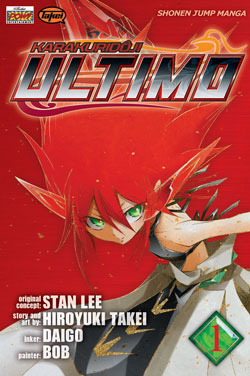
Manga Spotlight: Karakuridoji Ultimo Original Concept by Stan Lee Story and art by Hiroyuki Takei Released by VIZ Media
While super hero comics were a middle school obsession for me, it's been a very long time since I read them with any regularity. It wasn't so much that manga replaced Marvel and DC, as it was that I stopped following the medium around the time I hit high school, and when I came back, manga was my primary interest. I don't dislike the genre. For the most part, it just disinterests me. On the other hand, while I used to read as many Marvel comics as I could get my hands on, I was never much of a fan of Stan Lee, the creator (or co-creator) of many of its best known characters (Spider-Man, Fantastic Four, Hulk, Iron Man, Thor, X-Men, Daredevil, Doctor Strange). Consummate self-promoters have never been high in my book, and few self promoters are as consummate as Stan Lee. Marketing is one thing, but hype people trumpeting themselves and their product puts me on edge. Being on guard against exaggeration and mythmaking has long colored my regard for Lee. This wariness about the uncertain boundaries between claims and fact applies to Karakuridoji Ultimo. Stan Lee appears in the manga itself in a nice boost to the brand. He's only credited with concept work, but an interview in the book's appendix implies a closer involvement. That said, Lee suggests a comic collector's approach to the material that is at odds with the appeal of manga... "Do you have a message for Shonen Jump readers?" "Oh,absolutely. Save your money and go out there and buy as many copies of Ultimo as you possibly can. Don't just buy one because they're gonna be worth a lot of money in the future." Regardless of your level of enthusiasm for Lee, be aware Ultimo reads a lot more like a Hiroyuki Takei manga than Spider-Man or Ravage 2009. I do think that Stan Lee's Marvel work featured some good ideas for connection to his comic reading audience and humanizing his characters. Maybe some of what worked in Ultimo was his doing, but, for better or worse, apart from his name on the cover and his visage in the interior, you probably wouldn't be able to guess that he was involved. Stan Lee is currently attached to two manga properties. There's Heroman, with art by Tamon Ooda, serialized in Square Enix's Shonen Gangan (home of Soul Eater), and scheduled to become an anime from BONES (Fullmetal Alchemist, the Cowboy Bebop movie). The story of orphan Joey who uses a giant robot to save his cheerleader friend is cartoonishly American. And, there's Karakuridoji Ultimo, with art by Shaman King's Hiroyuki Takei, serialized in Jump SQ.II (and Shonen Jump in the US). And, this one is surprisingly Japanese. Karakuridoji Ultimo opens in 12th Century Japan, at the tail end of the Heian era. There's a concept of "culturally odorless" pop work. Something like Pokemon or Hello Kitty, which can be localized in such a way that its cultural origins are nearly undetectable. This is opposed to work that is metaphorically "natto," resembling, smelly, sticky bean paste. Those stories you've seen of dueling samurai... mostly set in the Tokugawa shogunate (1603 until 1868). Those stories of chaos and armies clashing... mostly Sengoku period (15th century to 17th century). Pop media based on Heian (794 to 1185) tends to get a bit courtly. The era does generate some pop interest via its onmyji mystics, but, essentially, it was largely pre-samurai. As such, Ultimo isn't just Japanese, it's Japanese rooted in a context most North Americans don't see much of. Outside the capital, Kyoto, Yamato and his group of anti-nobility bandits attack an elderly foreigner in a spider ornamented kimono. This Stan Lee double, Dunstan, is hauling a cart with two coffin like boxes labeled "Ultimo" and "Vice." These are Karakuridoji. "They are ultimate mechanical boys. Five senses reach into five dimensions and four limbs extend into four dimensions. That adds up to the power of nine dimensions. I have created them. They are equal to each other. Nothing like them has ever existed. If you wake them, you will die." They are ultimate good and evil. In order to discover the ultimate strength, Dunstan created these clockwork children to embody these abstract ideas, set to manifest their conflict. Over the years, Ultimo and Vice will choose different masters and battle towards truths: "which will win, good or evil? What influence will the result have over humanity?" Upon waking up, Vice transforms into an imposing, bladed form and validates Dunstan's warning by assaulting Yamato's bandits. Ultimo is initially reluctant to aid Yamato, proclaiming that the renegade has done nothing too evil, but is a little too violent to serve. But, as Yamato draws his sword and dives him to defend his comrades from the overwhelming opposition of Vice, Ultimo makes up his mind... The manga then cuts to the 21st century. Yamato is a down on his luck student. There were a young boy and girl among Heian Yamato's bandits. This pair, or at least the girl, resemble modern Yamato's peers. Takei employs an exaggerated approach to character designs with sharp lines and emphasized distinctions. In this case, Yamato's panel dominating, dangerous anti-hero type is starkly set against half-sized, large headed, childish classmates. Yamato goes to pawn his schoolbag to buy a present for Makoto Sayama's (the girl from his class and his bandit mob) birthday party. In the antique shop, Ultimo spots Yamato from within a glass case...breaking out and proclaiming "Nine centuries, Yamato-san! Ultimo missed you very much!" Presumably, this is setting the field for a Pokemon, or more precisely, Zatch Bell battle of surrogates. The story of Heian Yamato has evidentially not concluded , and what conflict ignites between modern Ultimo and Vice, along with their human partners is going tie into left over conflicts from Yamato's Heian anti-establishment campaign. Hiroyuki Takei does big in his battles. Shaman Warrior had its titanic spirits adopting fantastic shapes to dust it up. His new manga has to offer at least as much. Vice takes on a demonic, dragon form. The arms of both mechanical children extend into blades many times longer than the boys' heights... the better to bisect thrown buses with. With Takei's harsh lines, it can be a bit too loud, but the energy is undeniable. The operating principle for Marvel characters in the Stan Lee era was that they were underdogs prompted to becomes super-heroes... the blind lawyer, the dweeb bitten by the radioactive spider, the skinny scientist who turns into the rampaging ogre, the mutant outcasts... bolstered by the bright four color illustrations and stories of inter-dimension travels, there was something counter-culture about Stan Lee's work. Shaman King looked to disenfranchised peoples such as Japanese Ainu for its cast and set up a story of outsiders trying to fix the world... bolstered by characters with names like Lyserg Diethel (as in LSD), and marijuana imagery, there was something counter-culture about Hiroyuki Takei's work. The collaboration between Stan Lee and Hiroyuki Takei doesn't disappoint in this respect. Anger at authority and the notion that power corrupts is certainly nothing new. However, the grey area inhabited by Yamato and his outlaw comrades has some intriguing potential as the pivot point in a battle between good and evil. You have an almost Zoroastrian battle between pure good and evil, and people in the middle who don't conform to abstract ideas. Yamato's propensity towards violence, some of which is theoretically heroic, some of which is frowned upon, is interesting grist for this discussion. As are the contrasting roles of the reincarnated. Yamato is given a more mundane role in society in the 21st century, but the script is flipped a bit more significantly for other members of the Heian cast. Good versus evil is a bit for the kiddies, but Ultimo did more with its philosophical conceit than I thought it would. Even if this isn't the next chapter in the story of commerce between American and Japanese art, Ultimo does manage to be an engaging, shonen adventure with some interesting notions at work. I thought that I would be dismissing Stan Lee's foray into manga as a weak attempt to leap onto a popular medium, but I'm actually looking forward to seeing how Ultimo develops.
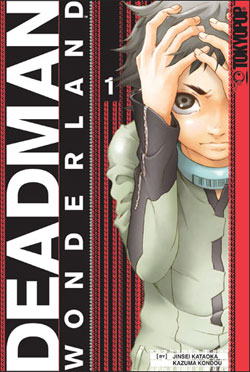
Manga Spotlight: Deadman Wonderland By Jinsei Kataoka and Kazuma Kondou Released by TOKYOPOP
In the wake of the Great Tokyo Earthquake... err... pop entertainment with earthquake tie-ins are a bit tough these days. I wonder if anyone was looking at licensing Tokyo Magnitude 8.0 and how Haiti's tragedy effected that. In the wake of the Great Tokyo Earthquake, Japan built the privatized prison/tourist attraction Deadman Wonderland. Despite this transformation of Japan's geographical and social landscape, middle school student Ganta Igarashi grew up under recognizably familiar circumstances. This mundane life was shattered in his early teens. In a normal classroom setting, Ganta looks out the window and sees a red, rag covered figure floating, trailing chains and dripping blood. The shocking presence unleashes a spray of hexagonal planes, slicing up Ganta's classmates. In the bloody wake of the event, Ganta is arrested for the killings and sentenced to death, to be carried out at Deadman Wonderland. It's Wonka's chocolate factory with brutal beatings. Walking through the death's head emblazoned Magic Kingdom gates, Ganta is lined up with other newcomers and given a bit of an orientation by a shapely young woman in a fascist flight attendant number. "Any questions?" she prompts... "Yup... how big are those cans." "G cup." Another young inmate bumps into Ganta. After the clumsy prisoner helps Ganta up, the curvy officer warns this pick pocket to return what he stole. Without giving him much time to respond, the woman draws a sword, slices into the chest of the thief, then steps on his head with her high heeled boot. In the midst of the brutal inmates, brutal administrators and brutal death spectator sports, Ganta finds an ally of sorts. Pale peer girl Shiro, outfitted in a skintight number that manages to make her look both naked and restrained, crawls through the installations rafters and utility tunnels, coming to Ganta's aid. Her regard for the hero is bewildering. Her manner is that of a young child. However, it certainly appears that there are few she can't overpower. There are elements of the shonen power progression tournament here. And, childish/physically impressive Shiro does possess characteristics of the kind of girl on which anime/manga rest their appeal. Neither of these is the hook of the series. Deadman Wonderland is unusual. It doesn't conform to a simple "if you like X, you'll like it" pattern. However, even if the recipe of elements is a complex one, whether it receives a cold reception or an embrace is dependent on a connection to its particular constellation of points of comparison. On one hand, Deadman Wonderland is the quintessential Shonen Ace title. This anthology is known for its many anime tie-ins, mostly of the mecha variety such as Neon Genesis Evangelion, various Gundam and various Macross . As the name implies, it's for a shonen, teen boys, audience, but it skews older than periodicals like Shonen Jump or Shonen Sunday, as it features darkly disturbing, and/or violent works, often populated by older characters such as Goth (teens investigating murders due to their pathological fascination with violent crime), Anne Freaks (a teen on the run after killing his mother combats a terrorist cult), MPD Psycho (a police detective/criminal profilers/serial killer with multiple personality disorder, adapted for TV by the infamous Takashi Miike), and Kurosagai Corpse Delivery Service (underemployed Buddhist college grads find work transporting corpses to where the dead need to be). Deadman Wonderland hits both Shonen Ace notes. It's not anime adapted, but it's certainly anime ready (and to be adapted into anime). Beyond its colorful vision of prison theme parks, this impression is enhanced by illustrations from Kazuma Kondou, the artist who adapted mecha anime Eureka 7 into manga (published in Shonen Ace). And it's violent. Late in the volume, Ganta is revealed to have a tool to facilitate his survival. It's a decidedly gruesome concept for a super power. Apart from the massacre of Ganta's class, Deadman Wonderland is not one of the more graphic manga you'll find in Shonen Ace. The two elements find a away to complement each other in Deadman Wonderland in a way that they don't in the violent Shonen Ace manga that have or would lend themselves to live action. It doesn't have the spilled organs of Goth or the exposed cadavers of Kurosagi Corpse Delivery Service. More often, Deadman Wonderland operates with cartoonish attacks and windshield spray gushes of blood. Beyond Deadman Wonderland's Shonen Aceness, it applies a mind for social satire to silver age comic extravagance. Ganta is set to fight for his life on the raised platform of a Ninja Warrior obstacle course at the behest of cruel institutions, for the amusement of the crowd. The occasional bits in which we see the spine of an anonymous inmate as he's sliced up by a pendulum blade might not pass Comic Code muster, but the situation is strikingly like ones in which a super hero is dropped into a death trap. With institutions, schemers and violent elements threatening him, the odds are against Ganta to a dire extent. Terrible circumstances and violence are afflicted on the desperate Ganta throughout. Even if there is pointed cultural criticism implied, it's too exaggerated to get too exercised about the ideology. That's not necessarily a flaw. It does skew young. A dose of jadedness can easily poison the fun of Deadman Wonderland. Still it has the right amounts of transgression, spectacle and attitude to enthrall readers of the right mindset.

Manga Spotlight: Black Jack By Osamu Tezuka Volume Nine Released by Vertical Inc
Osamu Tezuka is neither the creator of modern anime nor of modern manga, yet no creator was as instrumental has him in giving the two media their forms. He's credited with establishing the template for televised, Japanese produced animation. He helped defined the visual grammar used by manga to relay its stories. He worked to establish manga's breadth of genres and its nonconformity to specific tones. As significant as he was in shaping anime and manga, he wasn't at the spear had of every movement. At times, he was catching up with or commenting on the works of other innovators. At times, it looked like he was falling behind. To reiterate some of what was said in the review of volumes seven and eight, Black Jack was launched in 1973, the year in which the home of the 1964 Astro Boy anime that revolutionized the medium's television presence, Mushi Production, went bankrupt, two years after COM, an experimental anthology launched by Tezuka as a response to Sanpei Shirato's alt anthology Garo had folded, when Tezuka had begun to be perceived as the "old man of manga." Shonen Champion gave Tezuka the opportunity to tell the stories that interested him, and with that license he created Black Jack, a manga with which he recaptured his relevance, which gained a popularity second only to Astro Boy's. The weekly, serialized stories of unlicensed mercenary surgeon Black Jack were written to stand on their own. There were reoccurring characters, and occasionally they'd reference events established in other stories, but each twenty odd page episode was essentially atomic. Because of this, the stories could be collected in any order, and in fact, the set being released by Vertical is not organized in order of publication. Instead, there are loose themes or ideas unifying the stories packaged in a particular volume. Without being self indulgent, volume nine collects stories that are apparently personal. From the ground up, Black Jack is Tezuka. The character was his scalpel, with which he pealed back the layers of his philosphy, as it pertained to ethics, medicine, and humanity’s flaws and merits, cast into whatever scenario excited his interest on the given week. As such, no bit of Black Jack was too far removed from the mind of its creator. That said, I get the impression that volume nine's stories were a few degrees closer to Tezuka's heart than most other Black Jack episodes. Fascinatingly, in taking this approach Tezuka shifts the arguments at times, but also manages to affirm the criticism that he was speaking from the perspective of an older generation. Even then, the reasons why he won over his audience are evident. Many Tezuka touch points make appearances in the volume. If you make a study of the artist, this is a volume not to be missed. You can find complex sketches of Osamu Tezuka's personality in books like the Astro Boy Essays, the Art of Osamu Tezuka and God of Comics. Regardless of his own self-estimation, he had a notion of how to present himself that was considerably self-deprecating. Other volumes of Black Jack inserted Tezuka into the manga as a hapless doctor. He did actually have a medical license. When he appears in volume nine, it's Tezuka the frazzled, pressure cooked manga artist. Several times over the course of the volume, Tezuka appears as a Sisyphus, staggering under the weight of deadlines. Once, manga Tezuka is institutionalized for the fits. Another time, he is arrested for being at the wrong place at the wrong time. Phoning his editor, he has no choice but to get to work drawing manga from the police station. These scenes are the kind of gags Tezuka added to his manga for notes of levity. They aren't generally well regarded by modern, North American manga readers. Something you have to put up with to enjoy the rest of the brilliance. It's not exactly Botticelli painting himself into one of his works, but Tezuka as the Daffy Duck of manga artists is a little more amusing than most of these gags. The volume opens with "Teacher and Pupil," in which a boy tries to will himself sick from school (arguably the premise of Satoshi Kon's Paranoia Agent), then throws himself in front of a truck to avoid his granite faced math teacher, who looks more like a mob heavy than an instructor. At an after work bar meet-up, one teacher comments "really bad students make you wanna hit them. It makes me sad that you can't." Our imposing tormentor retorts "I never use violence. Instead, I beat 'em up with words... It deals them the shock they need as well as any blow." One might expect the turn of the story to be mediating the teacher's assaulting approach. The target audience of Black Jack would empathize with the boy. However, not only does Tezuka reveal that, far from being a sadist, the teacher has a great degree of affection for the boy, Tezuka, through his titular proxy, reveals that he has a great degree of affection for the teacher. After the sensational chaos of the likes of Go Nagai's 1968-1972 Harenchi Gakuen - Shameless School, weighing in favor of the teacher might be a bit "old man of manga," but Tezuka's embrace of people defined by qualities that he admires registers powerfully. It's true of this teacher; of the hospital confined couple with lupus and ALS in Gift to the Future; of the boy convinced that his gambling indebted father is the world's greatest doctor in Sun Dolls, and of the crude, but loving father of Three Legged Race. In an interesting note concerning Tezuka's reuse character designs, this father and son are one of the Tezuka's oldest pairs, round, mustached Shunsaku Ban (Astro Boy's teacher, among other roles) and Kenichi, the child who appeared in some of Tezuka's earliest works, such as his break-out New Treasure Island. And, in an interesting political note, the relationship between father and son breaks down after the kids grew out of his Kenichi visage and the teenage son joined a radical group (while wearing a "USA" t-shirt). You can look at the stories about the father and teacher as Tezuka telling a younger generation to appreciate what their elders are doing for them, or as an invitation to understand and share in his own admiration. Though Tezuka can be disagreed with, there is no second guessing his conviction. It's not manga with a moral simply for the sake of justifying a story. The narrative and the message are inseparable. Given Tezuka's mastery of manga, even if you're not in the mood for a story about how kid's don't realize how much their parents love them, even if the metaphor is a bit motivational poster-esque, the genuine sentiment comes across and does manage to pull some heart strings. Black Jack's vehicle for connecting to its Shonen Champion readership was the hard, hyper-competent black clad, two fisted surgeon on the cover. Over the course of this volume, he talks an incompetent through extracting a bullet from his kidney and fights of a school of sharks with his scalpels. The character is Tezuka's avatar in these stories. He's the catalyst through which ideas are proved out. His companion, Pinoko reoccurs in more stories than any other member of the manga's slight supporting cast. This assistant/adopted daughter/"wife" is aged is zero, about five, or eighteen depending on your reckoning. She was a "teratogenous cystoma" parasitic twin that Black Jack removed and gave an independent, childish body. The general idea is that she's comic relief. She mispronounces and makes up words. She flubs household chores. She's frequently exasperated. I'm not quite sure how she was regarded by the Shonen Champion reader, but a lot of older, modern, American Black Jack fans find her a bit creepy. The child who regards herself as Blackjack's wife, who he occasionally spanks for misbehaving is a bit much. Tezuka is evidentially fond of the character, and that fondness finds interesting outlets. Often, it's very meta, such as "Pinoko's Mystery," in which Tezuka played with rewriting her origin story. Volume Nine's "Pinoko Live" feels almost like an act of contrition. As in many cases in the volume, Tezuka expresses his sentiments through Black Jack and here the character berates himself for allowing Pinoko to fall ill on his watch. There is a sense in which Tezuka seems to be expressing some guilt over sentencing his creation to be an eternal object of mirth. Here's a tragic figure that will always be laughed at. The manga is dedicated to the specific stories and not the evolution of running characters. Even then, within the context of the manga, she'll always bee a child. Regardless of one's opinion of Pinoko there's something touching about Black Jack's actions within the context of the story and feelings that Tezuka has for his character. Over the course of the volume, Tezuka does more than comment on his self, his creations and his affection for those who endeavor to love, persist and improve the lives of others. The volume also demonstrates him pushing forward. His best known creation, Astro Boy gets re-used in a startling fashion, with few concessions to the fond memories of the innocent, eternal boy, or his genre roots. Anti-war and civil justice were Tezuka's chief causes in many of his works. These could be couched as the damage humanity does to itself. Ecology evidently began to climb his list of concerns, and in stories like "A Question of Priorities" he began putting equal weigh on the damage humanity was doing to the planet and its other species. The reason to appreciate Osamu Tezuka's work is not simply because of its influence. The repeated assertion that the artist was a brilliant innovator only goes so far against the "looks old!" reaction. Most manga, and most manga published in North America is pop product, produced to run as long as it’s popular in weekly, biweekly or monthly installments. On the pages of Black Jack volume nine, Osamu Tezuka bristles under that grind. And yet, he spun stories out of ideas that were truly meaningful to him, and wove them in such a way as to get the most out the medium. Stemming from that, there is plenty to appreciate about Black Jack in general and volume nine in particular.
Upcoming in North America
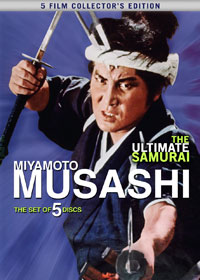
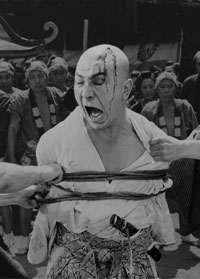
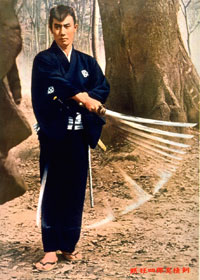
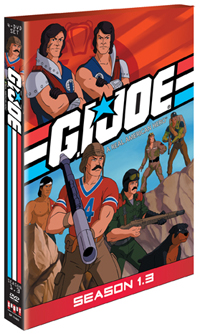
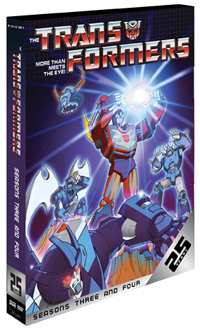
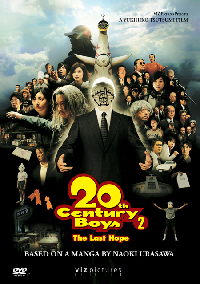
MoviesOnline.ca and ScreenRant.com have featured interviews with Laeta Kalogridis, the current screenwriter for Dreamworks and Steven Spielberg's planned live-action adaptation of Masamune Shirow's Ghost in the Shell. as noted by Anime News Network notes that among her comments are that the movie will feature "a lot of action … lots of action." "there's still going to be a lot of atmosphere - [The movie] is about vast possibilities - all of this technology, the Internet - it's about the limitless possibilities of this technology." "I think anime and manga are slowly becoming a big part of our mythos, I think yes, they're sort of a natural fit for films."* Not anime related, but of note, Invader Zim will run on Nicktoons in March, only over the course the month.* DC Comics is apparently developing a Young Justice League animated series, featuring characters Martian Girl, Aqualad, Nightwing, Impulse, Arrowette, and Connor Ken* The specs on the North American Ponyo release are English 5.1 DTS-HD Master Audio(48 kHz/24-Bit) French Dolby Digital 5.1 Surround Sound Japanese Dolby Digital 5.1 Surround Sound Compared to the Japanese release Japanese Edition: Japanese: DTS-HD Master / 6.1 / 48 kHz / 4537 kbps / 24-bit English: Dolby Digital Audio / 2.0 / 48 kHz / 256 kbps French, Italian, Korean, Spanish, Mandarin, Cantonese: Dolby Digital / 2.0 / 48 kHz / 192 kbps Subtitles: English, French, Italian, Korean, Spanish, Traditional Chinese, Simplified Chinese, Japanese Trailer: 2 versions TV spots: 11 versions Collaboration TV spots: 3 versions NTV TV spots: 2 versions Credit-less ending: 5 minutes Theme song announcement press conference: 11 minutes Voice recording: 25min The first day opening greeting: 10 minutes Hayao Miyazaki interview: 15 minutes A talk between Toshio Suzuki and Toshio Tsuchiya: 30 minutes NTV's program NEWS ZERO spin-off "Five genius craftsmen": 49 minutes A collection of document film "Hayao Miyazaki wise remarks": 40 minutes A collection of document film "Venice International Film Festival": 13min Theme song music video: 4min Theme song music video (Korean edition) : 3 minutes* a bit on the vampire in the live action adaptation of Priest* ICV2 reports a second volume of Bat-Manga: The Secret History of Batman in Japan is in the works. Chip Kidd, who put together the first Bat-Manga collection told ICv2 that assembling and designing that first volume "was a real labor of love. I hope to do a Volume Two of that. It won’t be for a while, but I’ve gotten a verbal nod from everybody involved to do it, and I have found a lot more really cool, cool stuff."* Bandai has started promoting The second season of Haruhi Suzumiya AnimEigo Upcoming releases includeJapan at War DVD Collection - Available February 2010 Japan's Longest Day, Battle of Okinawa, Father of the Kamikaze and Black Rain. Miyamoto Musashi - The Set of Five Discs - Available April 2010 The Blind Menace (Shiranui Kengyo) - Available May 2010 The Master of the Full-Moon Cut Returns - Available June 2010 Included in the second box set are: Sword of Fire (Nemuri Kyoshiro Enjyo-ken), Sword of Satan (Nemuri Kyoshiro Masho-ken), The Mask of The Princess (Nemuri Kyoshiro Tajo-ken), and Sword of Villainy (Nemuri Kyoshiro Burai-ken) FUNimation FUNimation parent company Navarre announced in their Q3 Fiscal 2010 earnings conference call that they licensed DragonBall Kai, which is scheduled for release in the "latter part of the upcoming fiscal year" Kai is a reedited, partially revoiced/rescored, more rapidly paced version of Dragon Ball Z * Via Robert's Anime Corner Store, April releases include Blade of the Phantom Master DVD (S.A.V.E. Edition) D.Gray-man Season #1 Part #2 DVD Boxed Set (Eps #14-26) (BLURAY) King of Bandit Jing in Seventh Heaven OVA DVD (S.A.V.E. Edition) Pumpkin Scissors Complete Collection DVD Boxed Set (Esp #1-24) (S.A.V.E. Edition) Strain: Strategic Armored Infantry Complete Collection DVD Boxed Set (Eps #1-13) (S.A.V.E. Edition) When They Cry: Higurashi, Complete Collection DVD Boxed Set (Viridian Collection) Kodansha International Sean Michael Wilson has posted a preview of Hagakure, an English version of which will be released September 2010 Its called HAGAKURE, which roughly means 'hidden leaves'. It's a manga version of a book originally written in 1716, about the way of the samurai. Its a key book about the Japanese warrior ideal that has influenced Japanese culture deeply, and perhaps continues to do so. Right Stuf Anime producer and distributor Right Stuf, Inc. and Nozomi Entertainment are pleased to announce the JUNJO ROMANTICA DVD Collection (Season 1) will be released on May 4, 2010. The Junjo Romantica DVD Collection will include the series’ complete 12-episode first season - plus video extras and a 24-page booklet with character biographies, artwork and behind-the-scenes information - housed in a colorful, Thinpak-style art box. Its sequel season, Junjo Romantica 2, will be released as a similar DVD set later in 2010 by Nozomi Entertainment. Based on Shungiku Nakamura’s best-selling boys’ love (yaoi) manga, the Junjo Romantica anime consists of two seasons (a total of 24 episodes) and features direction by Chiaki Kon (When They Cry - Higurashi, Nodame Cantabile: Paris) and animation by Studio DEEN (Gravitation, Kyo Kara Maoh!). JUNJO ROMANTICA © 2008 Shungiku NAKAMURA ? KADOKAWASHOTEN/Romantica Club!!Shout! Factory G.I. Joe: A Real American Hero 1.3 closes out the first season of the G.I Joe cartoon. The 22 epside set includes episodes "Worlds Without End," "The Traitor," "Cold Slither" and "There’s No Place Like Springfield." The Transformers Seasons Three and Four DVD set which is slated for April 20 release. This final 4-DVD set of the megapopular animated series concludes with the rarely seen three-episode fourth season of The Transformers setting up the Headmaster season Bonus Features Include: The Autobots, The Decepticons & The Fans - A look at the loyal fans of The Transformers From the Files of Teletraan-2 Rare PSAs Archival Hasbro Toy Commercials Art Gallery VIZ HONEY AND CLOVER Box Set 3 • Rated 'T+' for Older Teens • MSRP: $59.90 US/ $85.99 CAN • Available March 16 Contains Season 2, Episodes 1-12. SHONEN JUMP releases include: BLEACH Volume 26 • Rated ‘T’ for Teens • MSRP: $24.92 US / $35.99 CAN • Available March 23 NARUTO SHIPPUDEN Volume 7 • Rated 'T+' for Older Teens • MSRP: $24.92 US / $35.99 CAN • Available March 9 New POKÉMON Releases Include: POKÉMON ELEMENTS, Volume 9: Ghost • Rated 'A' for All Ages • MSRP: $9.98 US/ $14.99 CAN • Available March 23 POKÉMON ELEMENTS, Volume 10: Rock • Rated 'A' for All Ages • MSRP: $9.98 US / $14.99 CAN • Available March 23 From VIZ Pictures (Live Action Feature Films): HISASHI TENMYOUYA: SAMURAI NOUVEAU, NEW PEOPLE Artist Series Volume 4 • MSRP: $24.92 US / $35.99 CAN • Available March 9 A graphic designer turned contemporary artist, Hisashi Tenmyouya brings his own style of NEO-Traditional Japanese Painting to the art world. Tenmyouya reveals his soul through melding of modern urban subjects with traditional methods of painting. Live action K-20: The Fiend with Twenty Faces will be released on April 20th K-20: THE FIEND WITH TWENTY FACES It is 1949 in Japan, in a world where World War II never happened and the nobility system established in the Meiji Era is still in place. An extreme divide exists between the upper and lower classes, with 90 percent of the country's wealth being held by the upper class. The capital of Teito is in crisis with the emergence of a phantom thief known as "The Fiend (Kaijin) with Twenty Faces" or simply "K-20". Heikichi Endo (Takeshi Kaneshiro) is a circus acrobat who is deceived by K-20 and is set up to take the fall for the phantom thief. Using his incredible physical dexterity, Heikichi wages war against K-20 in order to clear his name, fighting alongside K-20's next wealthy target, Duchess Yoko Hashiba (Takako Matsu), and her fiance, brilliant detective Kogoro Akechi (Toru Nakamura). But what is the ultimate decision Heikichi has to make? 4/6 NARUTO SHIPPUDEN VOL. 8 4/13 NANA UNCUT BOX SET 4 - $59.90 4/20 BLEACH, VOL. 27 4/27 NARUTO UNCUT SEASON 2 VOL. 2 BOX SET - $39.97 VIZ Pictures, an affiliate of VIZ Media, LLC that focuses on Japanese live-action film distribution, will release the science fiction feature 20th CENTURY BOYS 2: THE LAST HOPE on DVD on February 16th in North America through its distributor, VIZ Media. 20th CENTURY BOYS will carry a MSRP of $24.92 US / $35.99 CAN. The 20th CENTURY BOYS saga is based on Naoki Urasawa’s manga series, 20th CENTURY BOYS (published in the US by VIZ Media) The story began in 1969 when a young boy named Kenji and his friends write "The Book of Prophecy" in which they write about a future where they fight against an evil organization trying to takeover the world and bring about doomsday. Years later in 1997, a mysterious cult being led by a man only known as "Friend" emerges and begins to gain strong influence over society. A series of catastrophic events begin to occur mirroring the prophecies made up by the young Kenji and the greatest fear is the climax of "The Book" becoming a reality; December 31st, 2000, a terrifying giant virus-spreading robot will attack the entire city of Tokyo leading to the end of mankind. The only people who know about "The Book" are Kenji and his childhood friends. Who is "Friend"? Will Kenji and his friends be able to save mankind and live to see the 21st Century?


Upcoming in Japan
Promos Armored Trooper Votoms: Phantom Arc Saru Lock - the live action adaptation of the locksmith action manga The Vanishment of Haruhi Suzumiy - theme song for movie Kokuhaku - from Kamikaze Girls director Tetsuya Nakashima Eden of The East the Movie II: Paradise Lost - also here Gundam Unicorn Gintama: Benizakura Arc - A New Retelling) - upcoming movie Anime Ghibli World reports that Suzuki Toshio's radio show Ghibli Asemamire indicated that the studip is making a new 10 minute short from Hayao Miyazaki. Though the short will have no dialogue, Suzuki mentioned it is very interesting, but can't tell about anymore details yet. Ghibli also indicated that they are considering making their short work available on YouTube. There's indication that My Neighbors the Yamadas, Ghibli co-founder Isao Takahata's adaptation of a family comic strip, may be the next Ghibli movie to recieve a Blu-ray release. Nausicaa.net reports Ponyo makes its TV debut February 5 at 9:00pm on NTV's Friday Roadshow program.* Andrez Bergen's preview of Satoshi Kon's Yume Miru Kikai (The Dreaming Machine) - with insight from Bergen's interview published in UK's Impact magazine "This is my own original story - therefore different from my previous work," Kon told me during that recent interview we did; it was the first time we'd chatted and he was surprisingly open, humourous and verbose. "While I was developing the script, I heard about a movie called WALL•E... and I got a little nervous that it might be similar to mine. I can't tell you how relieved I was when I learned that the two stories were totally different," he laughed. "In The Dreaming Machine, only robots are there. I want the audience to enjoy the adventures of robots who survived even after their parents - human beings - had become extinct. After Paprika, I ended up taking a vacation for over a year, so we've just started development on this. You can see this movie in 2011."* Daisuke Sato and Shoji Sato's Highschool of the Dead manga will be adapted into anime* Heroman, the anime version of Stan Lee's collaboration with BONES will hit Japanese TV in April.* A second St. Seiya: Lost Canvas is being planned* The Cho Denei-ban SD Gundam Sangokuden: Brave Battle Warriors is apparently going to spawn a tv follow-up* Maho Sensei Negima! OAD episodes 3 and 4 will conclude the Mô Hitotsu no Sekai story, to be available May 15th, with volume 30 of the manga, and August 20th, with volume 31.* The second season of schoolgirl rock band anime K-on will commence in April.* The first DVD of Nodame Cantabile: Finale will feature an unaired episode of the conservatory dramady.* a theatrical film of Soukyuu no Fafner: Dead Aggressor mecha anime is in production.* Range Murata (Blue Submarine No. 6, Last Exile) confirmed that he will not be involed with revival of Tow Ubukata's Mardock Scramble.* A limited edition of volume 10 of Tokuichi Minagi's The Residents of Ashiaraiyashiki, about fantasy creatures living together in an apartment build, will ship will an original anime short Manga Via News Paradise Four panel (yonkoma) specials of Jin Kobayashi's School Rumble (returning, after its conclusion), Fairy Tail and Area no Kish will be included in Bessatsu Shonen Magazine # 03, on sale February 9* New Trigun manga will be published in conjuction with the upcoming movie. Yusuke Takeyama's Raijin-Rising story will be packaged in Young King Ours # 04, on sale February 27.* New Evangelion manga Ikari Shinji Tantei Nikki (Evangelion - The Journal of Detective Ikari Shinji) will start in Asuka Gekkan # 04 (On sale February 24)* Soccer manga Captain Tsubasa return in Young Jump # 11 (On sale February 11). The series will be called Captain Tsubasa in the league - Kaigai Gekitô-hen.* Kurosagi Corpse Delivery Service illustrator Yamazaki Hosui will resume horror manga Mikumo to Kasane in Young King Ours # 04, on sale February 27. He published 3 chapters in 3 issues.* Hatsu Akiko will be ending Megami-sama to Watashiand starting a new shoujo series in issue 7 of Flowers* Nishi Keiko's Fuwa Fuwa Police will begin in Flowers issue 4.* Ôno Junko's one shot Toka Zoji will run in Flowers issue 4. Kiyohara Natsuno's one shot Yamahime-sama to Tabi Suru Ôji will also be in the issue.* Kenichi Kotani will be closing down his 12 year old seien relationship comedy Desire with the Desire 2nd Season chapter in Super Jump # 05 (On sale February 10).* Yu Watase will be bringing back the Genbu Kaiden spin-off of girl in mystical world shojo Fushigi Yugi in Rinka # 10 (For Sale May 14). Her Sakura-Gari will be ending.* Kindaichi Renjûrô's new series x Liar Liar will start in 2nd Dessert # 04 (On Sale March 24)* Fujisu Sakura's (Because They) new manga Private Times will start in Cookie # 04 (On sale February 26). Rin Saito's Boku no Heya he Oide yo will commence in the same issue* Trinity Blood Kiyo Kyujo resume in Gekkan Asuka # 04 (On sale February 24)* Live action drama "SP" is being turned into a manga by Yaku Haibara. The series follows a special police bodyguard unit Live Action Producers are denying reports that Motoki Murakami's Jin, about a brain surgeon transported to Edo era Japan, previously adapted into a live action drama, will be adapted into a movie. Music A doujin opera adaptation of Higurashi no naku koro ni will be performed at Nerima Bunka center on the 13th of March. Songs can be heard here* Remastered Sailor Moon soundtracks are due out in March
Cool Figures News
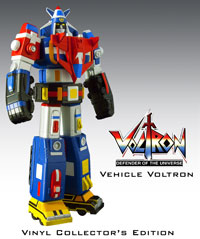
A Vehicle Voltron is apparently on its way from Toynamion CollectionDX Machinders from Goldorak (from the Shogun Warriors toy line) and UFO Robo Grendizer * Astro Boy vehicle toys* Ichiban Kuji Evangelion New Theatrical Ver. Double Chance Campaign Sci-Fi Japan presents An Overview and Price Guide for the Bandai Godzilla Toy Market Custom Lone Wolf and Cub figures

Anime x Games
Kotaku spoke to Tatsunoko vs. CAPCOM: Ultimate All Stars producer Ryota Niitsuma on topics such as which characters that didn't make it into the game (such as Samurai Pizza Cats and Genesis Climber Mospeada). The same actions and directors are attached.* Privateer Press will be releasing the VOLTRON: DEFENDER OF THE UNIVERSE battle miniatures game expansion to MONSTERPOCALYPSE in July 2010 with an MSRP of $49.99.* A special Pikachu™-colored version of the Pokémon Pichu will be available for distribution to Pokémon fans at more than 4,300 GameStop stores located throughout the U.S. and Puerto Rico Saturday, January 30, through Sunday, February 14 During that time, Pokémon fans who bring their Pokémon Diamond Version, Pokémon Pearl Version or Pokémon Platinum Version Game Cards , along with their Nintendo DS™ or Nintendo DSi system, to a U.S. GameStop store will be able to wirelessly add this unique Pokémon to their Pokédex. This Pichu distribution comes just before the release of Pokémon HeartGold Version and Pokémon SoulSilver Version on March 14, 2010.* a trailer for Gonzo's Super Street Fighter IV anime, to be packaged with the Japanese release Gundam Assault Survive, for the PSP, screenshots
Digital Distribution
FUNimation has the first couple episodes of the nicely animated Tetsuwan Birdy in on YouTube* Ahead of the release of Gundam Unicorn, Z Gundam is streaming on of sites, including Anime News Network until April 22. The well regard sequel to original "real robot" war anime features a mix of new protagonists and returning character struggling against the fascist regime spawned in reaction to the reprisals from Earth's victory over its orbiting colonies. Streams of the first Mobile Suit Gundam television series (with English dubbing) and the 2002 Mobile Suit Gundam Seed (with English subtitles) will follow on February 20 and be available through April 22. The Mobile Suit Gundam Seed Destiny sequel will debut online with English subtitles on March 25 and stay online until May 30.* on about.com:manga, Manga Publishers, Comics Creators React to the Apple iPad and, a collection of cold water thrown on the topic, including Yaoi Press publisher Yamila Abraham comment on how iTunes has rejected their "tamest" release, Zesty* Publishers Weekly took a look at the role of manga in Japan's eBook market After a slow start, Japan's e-book market is now booming, with $464 million in sales in 2008, up 131% from the previous year. E-book publishers predict that 2009 will have finished with similar growth, while a report by RD Impress suggests Japan's e-book market will be worth 98 billion yen ($1.1 billion) in 2012. With few dedicated e-readers sold in the country, Japan's large screen and comparatively hi-resolution mobile phones, known as "ketai," are primarily used as e-readers. Despite the obvious limitations of the phones-small screens that glare compared to e-readers-Japanese comics have proved their most popular reading content.* moe Nyarlathotep, Nyaruko-san is online, not as cool as it sounds* FUNimation has launched YouTube rentals at $0.99 per episode Titles include Sands of Destruction episodes 3-13 El Cazador de la Bruja episodes 5-26 Bamboo Blade episodes 5-26 Spice and Wolf episodes 3-13* The Anime Network is also renting on YouTube. The price is $1.99 per episode, or US$3.99 for movies. Available titles include Burn Up! OAV Daphne in the Brilliant Blue Destiny of the Shrine Maiden Legends of the Dark King: A Fist of the North Star Story Tears to Tiara UFO Ultramaiden Valkyrie 2009 Lost Memories Conduct Zero Guns & Talks Jail Breakers Jungle Juice Marrying the Mafia No Blood No Tears Yesterday* Viz is offering the first episode of Monster on Playstation Network through February 9* Idol Reina Tanaka's Phantom Thief Reinya shorts art now streaming in Crunchyroll* El Cazador de la Bruja is now entirely on Hulu* To promote a pachinko game, Gainax/Hideaki Anno mecha classic Gunbuster is streaming online (in raw Japanese)* The animators behind NASA's IRrelevant Astronomy videos has created a new NASA climate change short. The pilot NASA aims to reach kids about global climate change, with an emphasis on how it's affecting various wildlife habitats.

The Business
Imagi, animators of the Astro Boy movie, have closed their LA office, resulting the layoff of 30 employees. The company is currently seeking approximately $30 million in investment for further productions. The studio's currewnt plans include work a Gatchaman movie. Imagi International Holdings said it is in exclusive talks with a potential investor that could become its controlling shareholder Fromer creative director Felix Ip's chart of the studio history* Founder and chairman of IMAGI Animation Studios Kao Wai Ho, Francis announced the formation of his new entertainment company, Unicorn Studios ("Unicorn"). Staffed with a team of storytellers, character designers, and computer graphic artists, Unicorn plans to develop transmedia entertainment properties spanning the worlds of graphic novels, comics, video games, and animation. Unicorn's first creative undertaking is based on a series of martial arts novels called Sanger y Acero (Blood and Steel) from Hong Kong author Jozev.* North American manga publish Go! Comi has posted an update on their status From their forum Go! Comi is riding out a pretty tough storm in the publishing industry right now due to a combination of economic downturn and digital theft, both of which have had a devastating effect on even the biggest publishing companies. A lot of small-to-medium publishers (we fit into medium, at this point) have had to scale back their operations, let employees go, double up workloads, and put many of their books on hiatus or cancel them entirely. It would not be unreasonable to assume Go! has had to do some of these things itself, though I can't get into specifics there. :-X Our online store continues to be a barometer of what is currently available and what has yet to come out (and therefore is either experiencing a delay in production or has been temporarily put on hiatus with hopes of a later publication date). If it is available on our store, it is available in regular stores. If it is not, either it has not yet left the printers or it is on hold. Titles that were due six months ago but are not out yet are most likely on hold. Since licensing manga is currently an unpredictable business, what is on hold today might literally go into production tomorrow, so it's not possible for us to give you an accurate prediction of when late titles will become available. However, I wanted to let you know that Go! staff members are working their butts off to try and get you these titles, as each and every one is precious to the staff or else they would never have licensed them in the first place!* Japan's box office top 10 for 2009 were 1. ROOKIES -Sotsugyo- (¥8.55 billion) 2. Pokemon: Arceus and the Jewel of Life (¥4.67 billion) 3. 20th Century Boys: The Last Chapter - Our Flag (¥4.41 billion) 4. Evangelion: 2.0 You Can (Not) Advance (¥4.00 billion) 5. Amalfi: Megami no Hoshu (¥3.65 billion) 6. Detective Conan: The Raven Chaser (¥3.50 billion) 7. Gokusen: The Movie (¥3.50 billion) 8. Yomei Ikkagetsu no Hanayome (¥3.15 billion) 9. Yatterman (¥3.14 billion) 10. Crows ZERO II (¥3.02 billion) The top three foreign films were: 1. Harry Potter and the Half-Blood Prince (¥8.00 billion) 2. Red Cliff: Part II (¥5.55 billion) 3. Michael Jackson's This Is It (¥5.20 billion)* Borders CEO Ron Marshall has resigned after one year in the position.Michael Edwards, who joined Borders in September, will take over as interim CEO while Borders searches for a replacement. The two parties will submit the terms of settlement, which include a permanent injunction and an undisclosed payment from Upper Deck to KDE. Borders has also laid off 10 percent of their corporate workforce, consisting of 164 people. Bill Ackman, whose Pershing Square Capital Management hedge fund is the largest shareholder in Borders Group, told CNBC in an interview on Tuesday that he saw a Borders bankruptcy as "a very low probability event."* Cine Qua Non, a film distributor and producer that helped launch the Korean Wave in Japan in the early 2000s has declared bankruptcy. A derth of hits and sagging DVD sales are credited.* Diamond, the company that provides specialty comic shops with their merchandise, is adjusting their order fulfilling policy. Where the company had been cancelling orders from its customers for products that didn’t meet those thresholds, the company will now distribute all products for which it solicits orders in Preview.* Konami and Upper Deck have settled their law suit regarding counterfeit Yu-Gi-Oh! cards. Konami issued the statement "Upper Deck is extremely pleased with the cooperative resolution with Konami," the statement said. "Sometimes it simply takes a courtroom, the presence of a jury, and the start of a trial…."* Japan's Namco Bandai announced that the company will post a ¥31 billion ($342 million) loss this March. To offset that, 630 employees will be laid off.* Anime News Network has translated an Oricon breakdown Japan's publishing market. Manga entries included Shueisha - 68.8 billion yen/US$759 million - 6.0% Kodansha - 50.9 billion yen/US$563 million - 4.4% Shogakukan - 7.7 billion yen/US$417 million - 3.3% Square Enix - 18.5 billion yen/US$205 million - 1.6% Kadokawa Group Publishing - 13.1 billion yen/US$145 million - 1.1% Hakusensha - 13.0 billion yen/US$144 million - 1.1%* FUNimation announced their financials for third quarter of fiscal year 2010, which ended on December 31. Net sales were US$20.9 million for the period ending December 31, a decrease of 15 percent from the previous year. Navarre said sales of anime products declined "as a result of a weaker release schedule compared to the prior year."
Event News
The Beat notes Del Rey’s Dallas Middaugh will be teaching a class at NYU this Saturday entitled ‘Publishing the Graphic Novel’* More IFC Center screening dates have been added for talked about Japanese horror movie House # Thu, Feb 4 at: 1:10 PM, 3:10 PM, 7:45 PM # Fri, Feb 5 at: 12:35 PM, 8:10 PM, 9:55 PM, 11:55 PM # Sat, Feb 6 at: 12:35 PM, 8:10 PM, 9:55 PM, 11:55 PM # Sun, Feb 7 at: 12:35 PM, 8:10 PM, 9:55 PM # Mon, Feb 8 at: 12:35 PM, 9:55 PM # Tue, Feb 9 at: 12:35 PM, 9:55 PM* FUNimation will be screening Soul Eater - Episodes 1-4 with special guest Todd Haberkorn, voice of Death the Kid at: Studio Movie Grill, Addison 5405 Beltline Rd. Dallas, TX 75248 February 9, 2010 @ 6:30-9:30pm* Upcoming Screenings at San Franciso's Viz Cinema 20th CENTURY BOYS 2: THE LAST HOPE Tuesday, February 9th 7:30pm Don’t miss the exclusive event preceding the long-awaited DVD release of 20th Century Boys 2 from VIZ Pictures. It’s now 2015, and Friend rules a disturbing new world. Kenji’s niece, Kanna, is now in high school and her textbook contains a fabricated story about him being the terrorist behind the horrific events of 2000. Kanna, knowing the truth, openly resents this, and as a result she is marked as a problem child and sent to Friend Land, a facility where people with rebellious anti-Friend behavior are re-educated. There Kanna learns a crucial secret about Friend. Tickets for this special screening are $25.00 and will include a copy of the 20th Century Boys 2 DVD, a postcard, and NEW PEOPLE pin buttons to all who attend. $10.00 tickets are also available for regular admission. Josee, The Tiger and The Fish, February 5th - February 18th REGIONAL PREMIERE Love blooms between two unlikely people when college student Tsuneo meets Kumiko, aka "Josee," a young woman who embraces life with a feisty personality, despite cerebral palsy and her need for a baby buggy for transport. Isshin Inudo deftly adapts author Seiko Tanabe’s short story into a poignant feature film that was a genuine crowd pleaser and won numerous awards including a Best New Director Award from The Japanese Minister of Education. The Tiger and The Fish takes a place alongside memorable films such as Benny & Joon, What’s Eating Gilbert Grape and Rory O’Shea Was Here and captures the resilience of the human spirit in the face of physical handicaps and shows how love can flourish with pride and self-determination.La Maison De Himiko, February 18th - March 4th REGIONAL PREMIERE Family secrets, redemption, and the power of love to renew family bonds are explored between a father and daughter who can’t understand each other and a man and a wom